







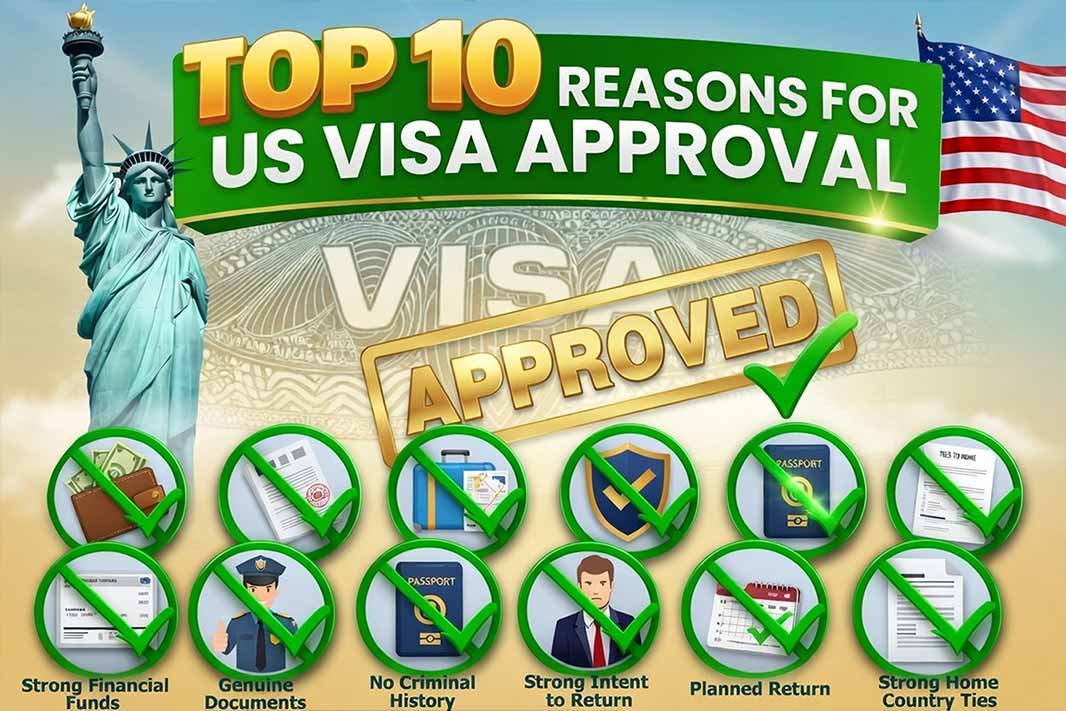
The United States continues to be one of the most popular destinations for Indian tourists, students, and professionals. With its diverse cities, world-class universities, and career opportunities, millions of Indians apply for a US tourist or business visa every year. However, in recent years, there has been a noticeable increase in US visa rejections, leaving applicants frustrated and confused about what went wrong.
In 2024, over 16.32% of US tourist visa applications from India were rejected. Many of these denials are preventable and result from common errors or misunderstandings during the application process. Some, however, stem from strict US immigration laws.
At Visa4, we aim to guide you through the top US visa rejection reasons and provide practical tips to help you strengthen your application and avoid common pitfalls.
Why US Visa Applications Are Denied
A US visa officer approves applications based on the assurance that applicants will return to their home country after their visit. If the officer suspects that you might overstay or identifies inconsistencies in your application, your visa may be denied. Here are the most common US visa rejection reasons for Indian applicants:
1. Weak Ties to Home Country
The US consular officer must be confident that applicants have strong reasons to return to India. Weak ties can result in visa denial.
Examples of strong ties include:
- Permanent employment or business
- Ongoing education
- Family obligations
- Property or land ownership in India
Pro Tip: Provide clear evidence such as employment letters, proof of property ownership, or educational enrollment to demonstrate your commitment to returning. This is one of the most common US visa rejection reasons for Indians.
2. Insufficient Financial Documentation
Financial stability is a crucial factor in visa approval. If an applicant cannot demonstrate adequate funds to cover travel expenses, accommodation, and living costs in the US, rejection is likely.
Pro Tip: Submit updated bank statements, income tax returns, salary slips, or a sponsor letter if someone else is funding your trip. Complete and authentic documentation ensures that your visa officer trusts your financial readiness.
3. Unclear or Vague Travel Purpose
Applicants whose travel purpose is vague or inconsistent with their application details may be rejected. The consular officer needs a clear, logical reason for your visit.
Pro Tip: For tourism, provide a detailed itinerary including city names, attractions, and hotel bookings.
For business or conferences, include invitation letters, event schedules, or company sponsorship documents.
Being transparent and consistent in your explanation can significantly improve your chances.
4. Incomplete or Inaccurate Application Forms
Even minor errors or inconsistencies between your application form and interview answers can lead to visa denial.
Pro Tip: Use professional assistance like Visa4 to review, verify, and submit your forms. Ensuring accuracy is essential, as errors on forms are a leading cause of US visa rejection.
5. Poor Interview Performance or Nervousness
The visa interview is the final step in your application process. An applicant who appears nervous, evasive, or unprepared may be denied.
Pro Tip: Practice for common questions and remain calm. At Visa4, we provide interview preparation guidance, including mock sessions, so you can confidently present your case to the officer.
6. No Prior Travel History or Visa Violations
Applicants without prior international travel experience may be considered at risk. Similarly, a history of overstaying or visa violations can lead to denial.
Pro Tip: First-time travelers should focus on showcasing financial stability, purpose of visit, and strong ties to India. If you have past visa issues, always provide an honest explanation to maintain credibility.
7. Possible Intent to Immigrate
Non-immigrant visas are intended for temporary visits. If the officer suspects that you intend to remain in the US permanently, your visa may be denied.
Pro Tip: Clearly demonstrate your intent to return by providing evidence of employment, family, property, or ongoing studies in India. Avoid any ambiguity during your interview.
8. Submission of Forged or False Documents
Submitting falsified bank statements, academic records, or employment letters is considered fraud and can result in long-term ineligibility.
Pro Tip: Always submit authentic, verifiable documents. At Visa4, we ensure your application is based on genuine records, improving your approval chances.
9. Weak Academic or Career Profile
For student visas, consular officers evaluate the applicant’s academic performance and career goals. A weak profile or unclear future plans can result in rejection.
Pro Tip: Explain why you chose a particular course and university, how it aligns with your career goals, and your plans to return to India after completing your studies. Supporting documentation strengthens your case.
10. Overconfidence or Arrogance During Interview
While confidence is important, overconfidence or casual behavior can negatively impact the officer’s perception.
Pro Tip: Dress professionally, be respectful, and respond politely. Your attitude, combined with proper documentation, plays a significant role in visa approval.
How Visa4 Helps Minimize US Visa Rejection
At Visa4, our mission is to maximize your chances of US visa approval by guiding you through every step of the process:
- US visa appointments in just 2 weeks
- Expert-reviewed documentation to avoid errors
- AI-assisted application preparation
- Interview preparation support including mock sessions
- Real-time updates and complete transparency
By leveraging professional guidance, you reduce the likelihood of making common mistakes that lead to US visa denial.
Additional Tips to Avoid US Visa Rejection
- Double-check your application forms for errors.
- Provide consistent, verifiable information during the interview.
- Keep financial documents updated and authentic.
- Be honest about prior travel history or visa violations.
- Maintain a professional attitude during your interview.









Leave a comment